Articles in this Volume

Research Article Open Access
Effectiveness of eHealth interventions for diabetes management in public health surveillance: a systematic review
Article thumbnail
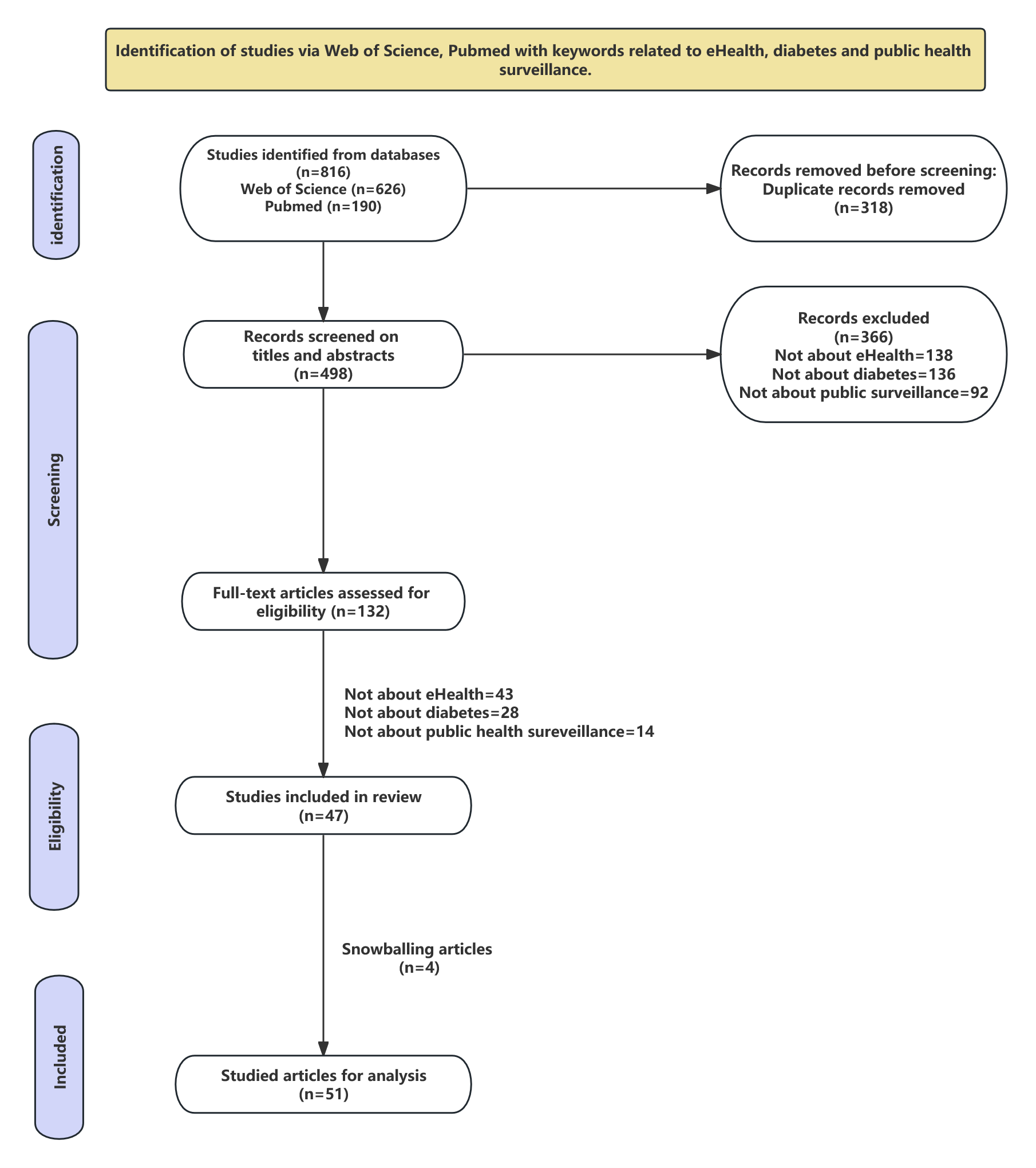
Diabetes poses a growing global public health challenge, creating a strong demand for management approaches that can support long-term monitoring and timely intervention. This study evaluates how eHealth interventions contribute to diabetes management within public health surveillance by reviewing recent evidence on their functions and impact. The analysis covers major digital tools currently applied in diabetes care—such as mobile health applications, remote glucose monitoring devices, telemedicine services, electronic health record systems, and decision-support technologies—and examines their performance using findings reported in recent empirical studies. Results across the literature show that eHealth interventions can improve treatment adherence, strengthen data continuity, and enable earlier identification of glycemic deterioration through continuous or near real-time data exchange. These tools also enhance communication between patients and providers, facilitating more responsive clinical adjustments and contributing to better surveillance at the population level. Despite these advantages, issues including system interoperability, uneven digital access, and unresolved data privacy concerns continue to limit broader implementation. Overall, the evidence indicates that eHealth technologies offer meaningful support for diabetes management and surveillance, while also highlighting the need to improve digital infrastructure and data standards to fully leverage their public health potential.

Show more
Read Article PDF
Cite
Research Article Open Access
Current status and prospects of cultured meat research
With the continuous growth of the global population, both the demand for meat and the scale of animal farming have increased sharply, placing immense pressure on the environment. Consequently, the sustainable production of animal-derived protein has become a critical issue. Among various approaches, the technology of cultured meat—producing animal protein in the laboratory from stem cells and other cell types—has emerged as a relatively mature research area. This technique addresses key challenges in traditional animal protein supply through its simple operational process and shorter production cycle. Over decades of development and innovation, cultured meat technology has evolved to include a range of novel methods, such as using xuan paper as a scaffold for cell cultivation, further advancing its potential. This paper provides an overview of cultured meat research, focusing on its background, production processes, three-dimensional culture and tissue shaping techniques, and related commercial developments.
Show more
Read Article PDF
Cite
Research Article Open Access
Process optimization for lotus-root total dietary fiber cookies based on physicochemical properties
Article thumbnail
This study aims to increase the total dietary fiber content in cookies, reduce excessive sweetness in baked products, and enhance satiety, thereby providing a reference for developing a low-fat, high-fiber cookie. Using water-holding capacity, expansion ratio, and sensory evaluation as indicators, we optimized four factors—total dietary fiber particle size, total dietary fiber addition level, butter amount, and powdered sugar amount—through single-factor experiments and an orthogonal design. The optimal formulation obtained was as follows: dietary fiber passing through a 160-mesh sieve; dietary fiber addition level of 11%; 35 g of powdered sugar; and 25 g of butter. Cookies produced under these conditions had a uniform and regular appearance, an appealing golden color, and a crisp yet appropriately firm texture, accompanied by a rich, sweet aroma.
Show more
Read Article PDF
Cite
Research Article Open Access
Elucidating early immune signaling pathways underlying chickpea resistance to necrotrophic fungi: a comparative transcriptomic and hormonal analysis
Article thumbnail
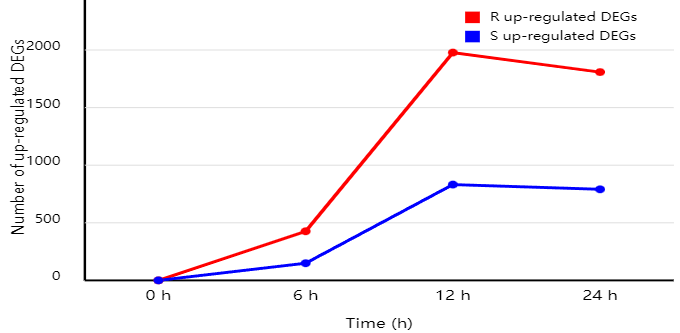
Chickpea is a major protein source in dry and semi-arid regions, but diseases caused by necrotrophic fungi strongly limit yield and the early immune signaling mechanisms remain unclear. This study used one resistant and one susceptible chickpea line inoculated with a dominant Ascochyta isolate and collected leaf samples at 0, 6, 12 and 24 h, combining RNA-seq with quantification of JA, ACC, SA and ABA to compare time-course responses between genotypes. The resistant line showed large-scale transcriptional reprogramming by 12 h with many more up-regulated genes than the susceptible line and strong enrichment in receptor-like kinases, WRKY/ERF transcription factors and cell wall modification pathways. JA and ACC in the resistant line increased rapidly and showed high correlations with key co-expression modules, whereas the susceptible line showed weaker activation and a rise in ABA. The work proposes an early immune signaling framework for chickpea challenged by necrotrophic fungi and identifies a set of candidate hub genes tightly linked to JA/ethylene pathways that can support mechanistic studies and marker-based selection.
Show more
Read Article PDF
Cite